Atmosphere
Participating Media
大气粒子的种类
- Volume filled with particles
- Interact differently with light depending on its composition
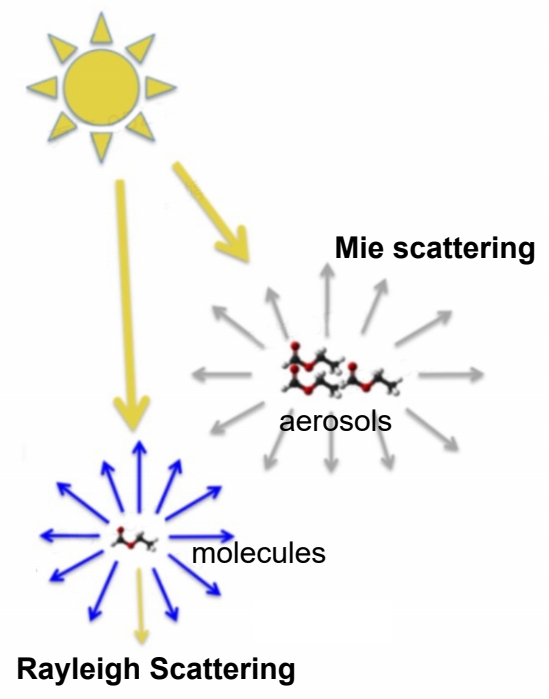
大气层有两种粒子构成:
(1) 各种气体分子
(2) 气溶胶
这些是光的介质,是产生各种光学现象的原因。
气体分子直径远小于光的波长,气溶胶的直径与光的波长相似,因此表现出完全不同的视觉效果,也对应两种不同的模型。
How Light Interacts with Participating Media Particles?
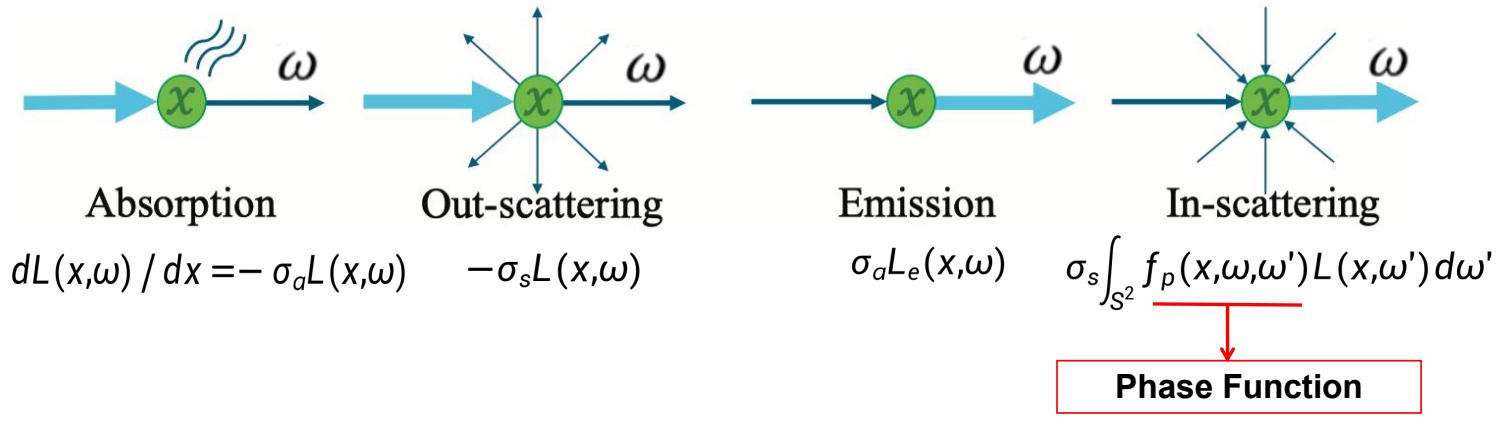
(1) 吸收 (2) 散射 (3) 自发光
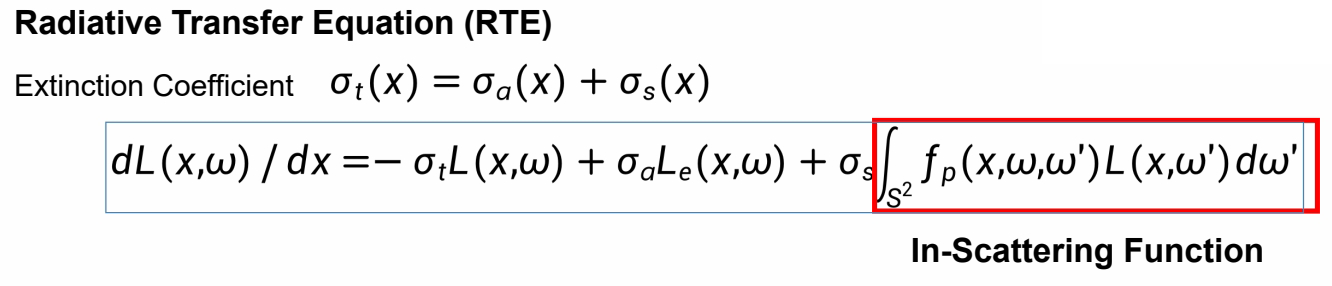
Volume Rendering Equation (VRE)
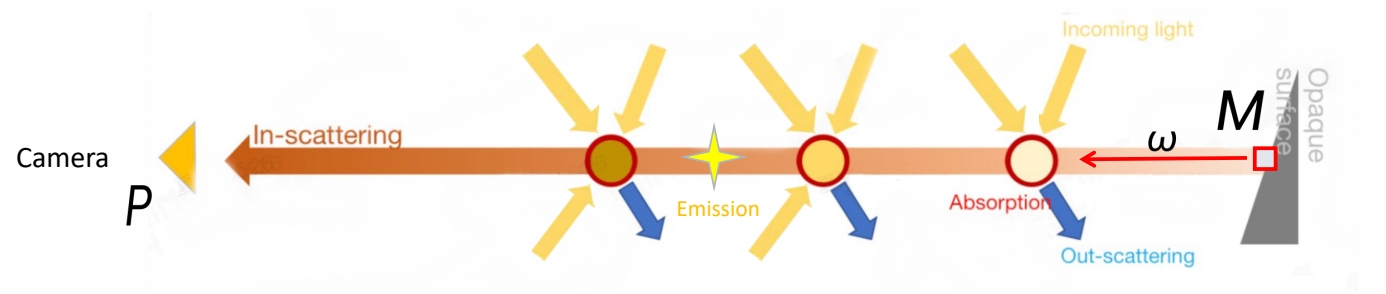
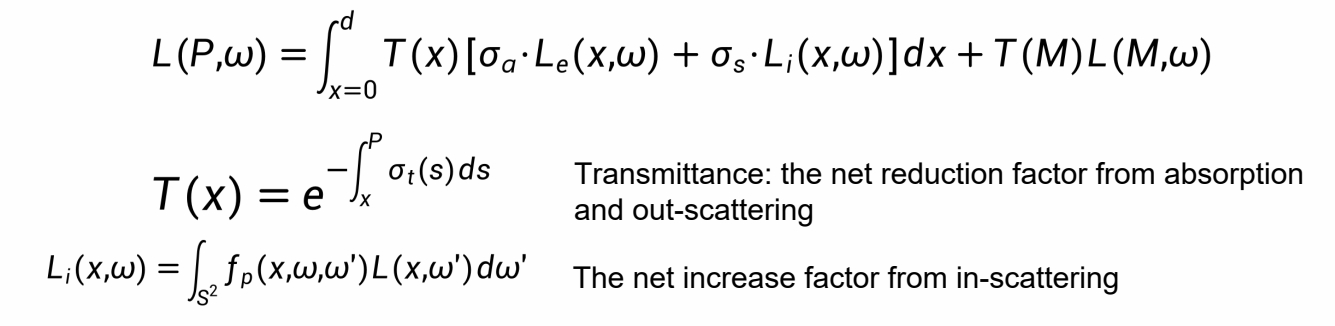
(1) 通透度 (2) 有多能量向视线方向辐射
气体分子散射模型 - Rayleigh Scattering
Scattering of light by particles that have a diameter much smaller than the wavelength of the radiation (eg. air molecules)
Rayleigh,用于气体分子。特点:
- 均匀散射
- 波长越短(紫),散射越多
- Certain directions receive more light than others front-back symmetry
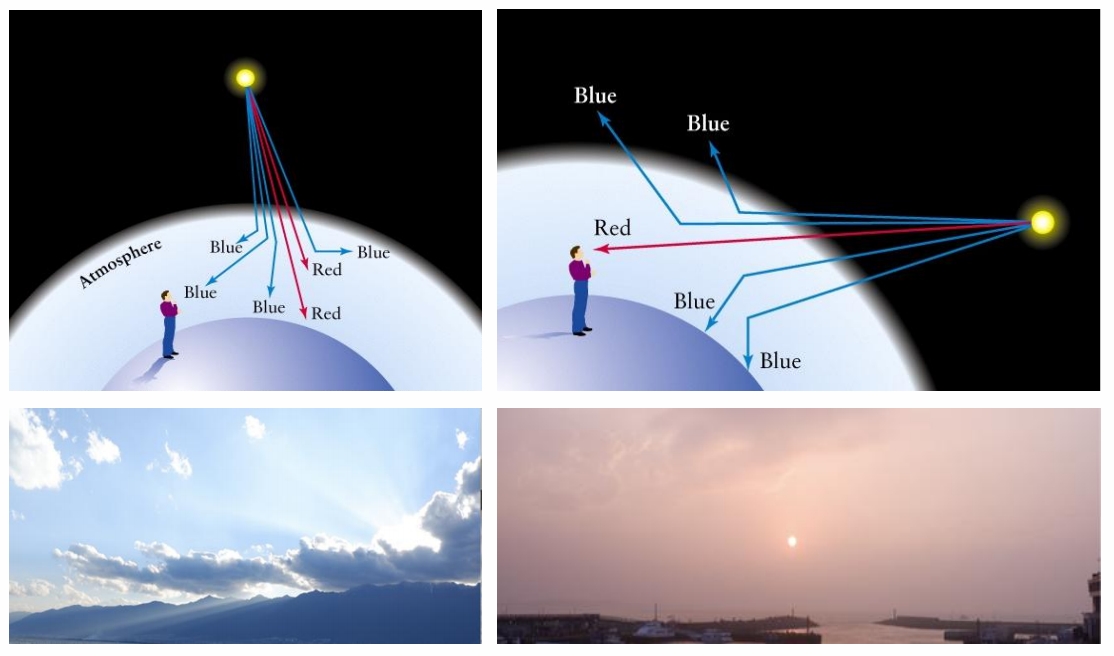
- Shorter wavelengths (eg. blue) are scattered more strongly than longer wavelengths (eg. red)
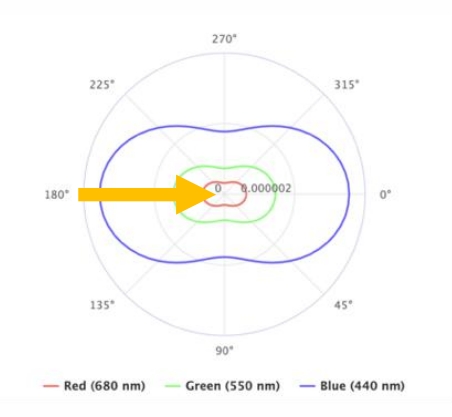
Rayleigh Scattering Equation
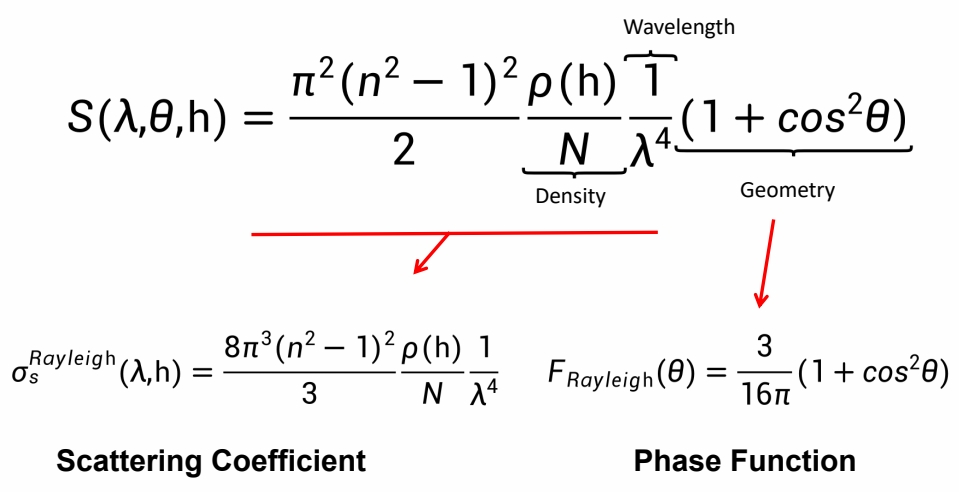
\(\lambda\):波长。\(\theta\):夹用。\(h\):海拔高度。
Why Sky is Blue
气溶胶散射模型 - Mie scattering
Scattering of light by particles that have a diameter similar to or larger than the wavelength of the incident light (eg. aerosols)
Mie,用于气溶胶。特点:
- 有方向性,沿着光的方向会强一点
- 对波长不敏感。
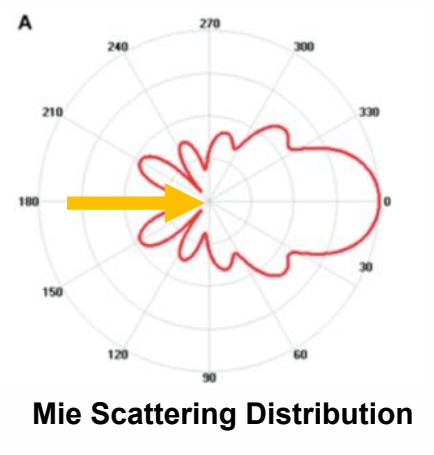
Mie Scattering Equation
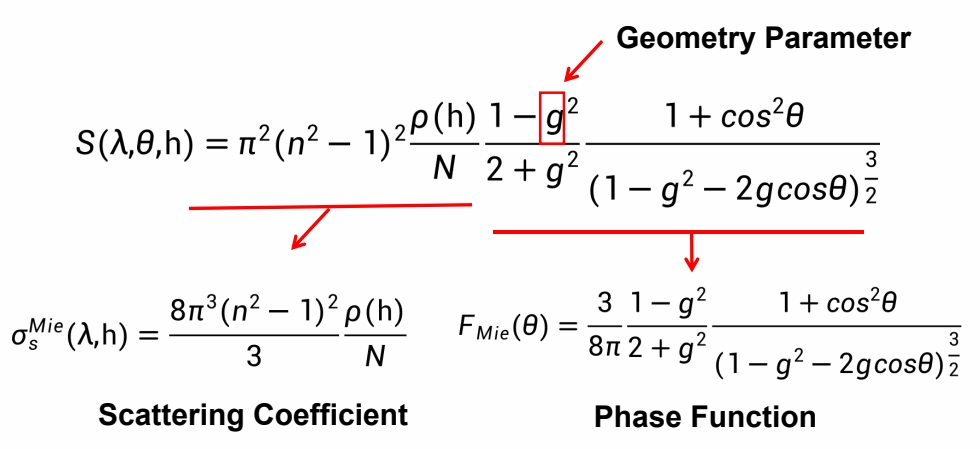
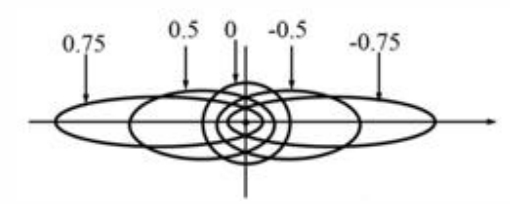
- g > 0, scatters more forward Mie scattering
- g < 0, scatters more backward
- g = 0, Rayleigh scattering
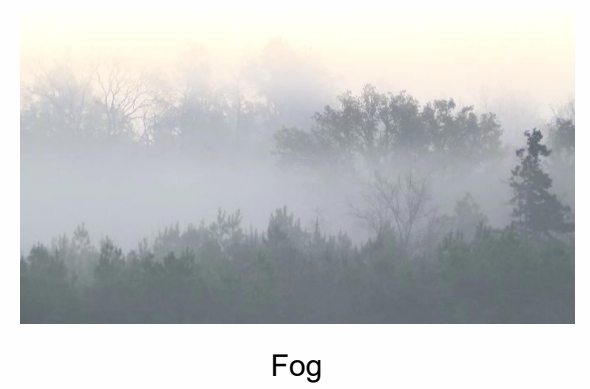
Mie Scattering in Daily Life
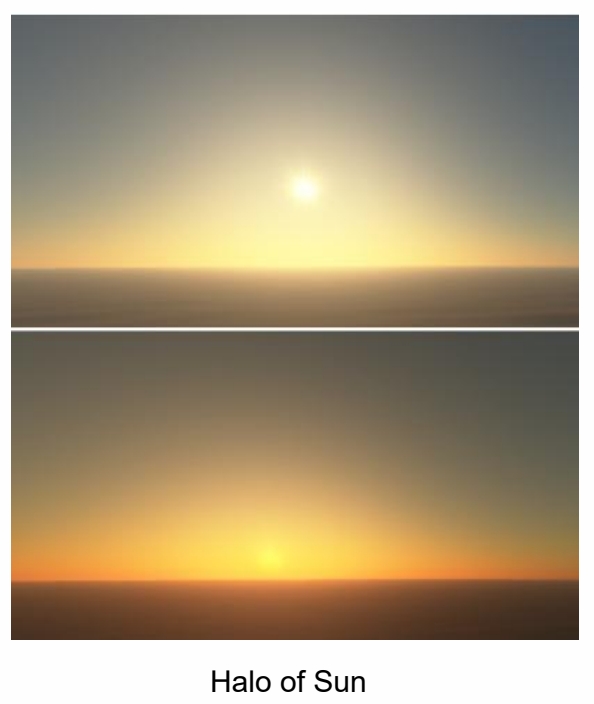
- Exhibit a strong forward directivity (halo effects around sun)
- Scatter light of all wavelength nearly equally (fog effects)
\(O_3\) 和 \(CH_4\) 吸收短波,使物体表现出蓝色。
假设空气中 \(O_3\) 和 \(CH_4\) 是均匀分布的。
本文出自CaterpillarStudyGroup,转载请注明出处。
https://caterpillarstudygroup.github.io/GAMES101_mdbook/